



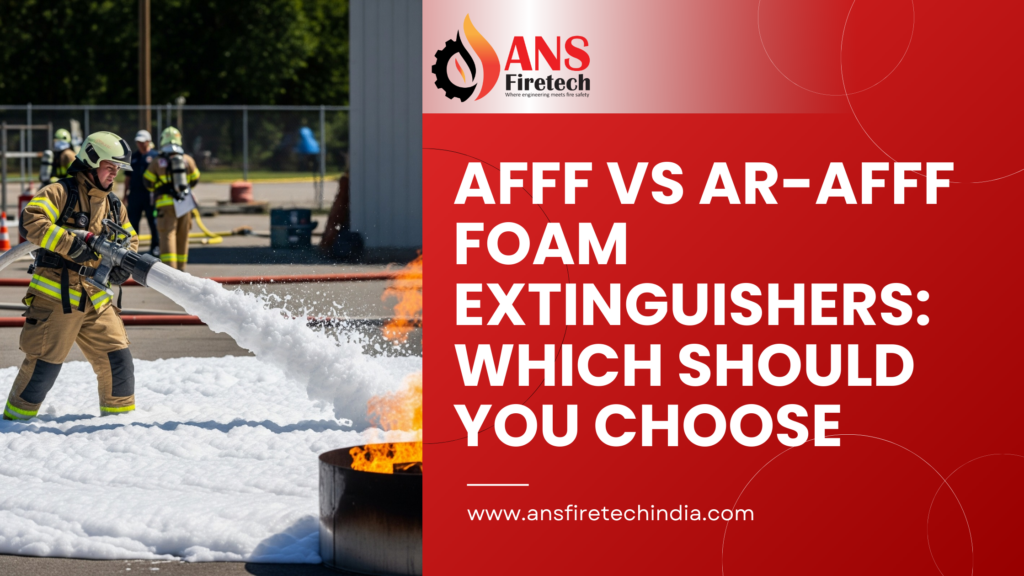
In sectors including oil and gas, industry, aviation, and chemical storage, foam fire extinguishers are essential for putting out hazardous liquid fires. AFFF (Aqueous Film Forming Foam) and AR-AFFF (Alcohol-Resistant AFFF) are two of the most popular foam agents. Although both are intended to put out Class B fires, their composition, functionality, and application are very different.
This comprehensive reference describes the characteristics, applications, benefits, and differences between AFFF and AR-AFFF foam extinguishers as well as how to select the best one for your fire risk. Trending keywords like foam fire extinguisher, AFFF vs. AR-AFFF, flammable liquid fire protection, and industrial fire safety are used to optimise the content.
Understanding Foam Fire Extinguishers
Foam fire extinguishers are primarily used for Class B fires, which involve flammable liquids such as petrol, diesel, oil, solvents, and chemicals. They work by forming a blanket over the burning liquid, cutting off oxygen, and preventing vapor release.
Foam extinguishers are commonly used in:
- Fuel storage areas
- Chemical plants
- Warehouses
- Airports and hangars
- Refineries
- Laboratories
Among foam agents, AFFF and AR-AFFF are the most popular due to their fast knockdown capability.
What Is AFFF (Aqueous Film Forming Foam)?
AFFF is a synthetic foam agent designed to rapidly suppress hydrocarbon fuel fires. It creates a thin aqueous film that spreads across the surface of the burning liquid, separating fuel from oxygen.
Key Features of AFFF
- Forms a fast-spreading film over fuel surfaces
- Quickly knocks down flames
- Excellent cooling properties
- Highly effective on hydrocarbon fuels
- Widely used in industrial fire protection
Typical Uses of AFFF Foam Extinguishers
- Petrol and diesel fires
- Aviation fuel fires
- Oil storage facilities
- Fuel stations
- Marine and offshore installations
Limitations of AFFF
AFFF is not suitable for polar solvents such as alcohols, ketones, esters, and acetates. These liquids break down the foam blanket, reducing effectiveness.
What Is AR-AFFF (Alcohol-Resistant AFFF)?
AR-AFFF is an advanced foam agent designed to handle both hydrocarbon fuels and polar solvent fires. It contains polymer additives that form a protective membrane, preventing the foam from being destroyed by alcohol-based liquids.
Key Features of AR-AFFF
- Alcohol-resistant foam technology
- Effective on both polar and non-polar liquids
- Strong foam blanket stability
- Enhanced burn-back resistance
- Suitable for high-risk industrial environments
Typical Uses of AR-AFFF Foam Extinguishers
- Chemical manufacturing plants
- Alcohol storage facilities
- Pharmaceutical industries
- Paint and solvent storage
- Laboratories and processing units
Why AR-AFFF Is Trending in 2026
With increasing use of ethanol, biofuels, and chemical solvents, AR-AFFF foam extinguishers are becoming the preferred choice for comprehensive flammable liquid fire protection.
AFFF vs. AR-AFFF: Key Differences
Fire Type Compatibility
AFFF works best on hydrocarbon fuels only.
AR-AFFF works on both hydrocarbon fuels and polar solvents.
Foam Stability
AFFF foam can break down when used on alcohol-based fires.
AR-AFFF forms a protective polymer layer that resists foam destruction.
Cost
AFFF extinguishers are generally more cost-effective.
AR-AFFF extinguishers are more expensive but offer broader protection.
Application Areas
AFFF is suitable for fuel storage, aviation, and oil industries.
AR-AFFF is ideal for chemical plants, laboratories, and mixed-risk areas.
Which One Should You Choose?
Choosing between AFFF and AR-AFFF depends on the type of flammable liquids present in your facility.
Choose AFFF If:
- You handle only hydrocarbon fuels
- Your risk involves petrol, diesel, or aviation fuel
- Cost efficiency is a priority
- Your application is limited to fuel-based fires
Choose AR-AFFF If:
- You deal with alcohols or chemical solvents
- Your site has mixed flammable liquid risks
- You need higher fire safety compliance
- You want long-term, versatile fire protection
In high-risk industrial environments, AR-AFFF is often recommended despite the higher cost due to its wider fire suppression capability.
Environmental and Regulatory Considerations
Environmental effect has received more attention in recent years due to fire safety laws. Fluorinated chemicals, which are regulated in many areas, may be present in conventional AFFF and AR-AFFF foams.
Trending developments in 2026 include:
- Fluorine-free foam alternatives
- Low-toxicity foam agents
- Eco-friendly fire suppression systems
Always ensure the foam extinguisher complies with local fire safety standards and environmental regulations.
Maintenance and Inspection Tips for Foam Extinguishers
Regardless of whether you choose AFFF or AR-AFFF, proper maintenance is essential.
- Inspect pressure gauges monthly
- Check for corrosion, leakage, or nozzle blockage
- Ensure seals and safety pins are intact
- Conduct annual professional servicing
- Replace or refill extinguishers after use
Well-maintained foam extinguishers ensure reliable performance during emergencies.
Final Thoughts
Extinguishers of the AFFF and AR-AFFF foam types are crucial components of contemporary fire safety systems. While AR-AFFF provides superior protection for complicated chemical and alcohol-based fire threats, AFFF is efficient and cost-effective for hydrocarbon fuel fires.
You can select the best foam fire extinguisher, enhance flammable liquid fire protection, and guarantee adherence to industrial fire safety regulations by knowing the distinction between AFFF and AR-AFFF.
Choosing the correct foam extinguisher today can prevent major losses tomorrow.