


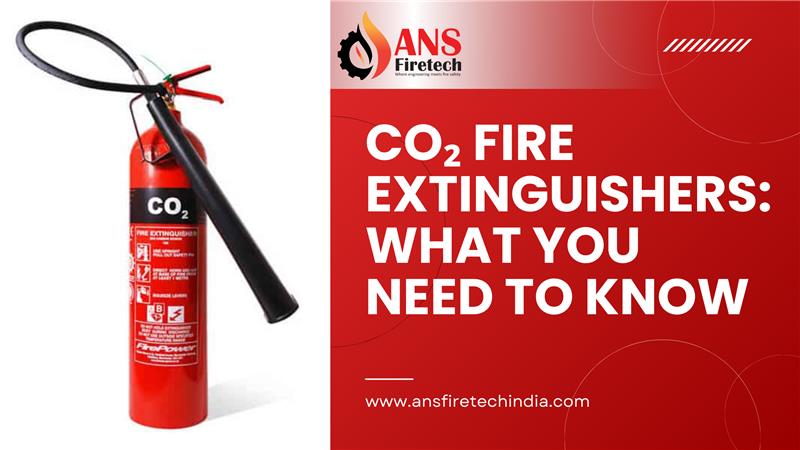
In a realm where fire safety is crucial, grasping the significance of CO₂ fire extinguishers can make a significant difference. These tools are crucial for addressing certain fire types, and they also offer distinctive benefits that differentiate them from conventional extinguishers.
What precisely makes CO₂ extinguishers a preferred option in different environments, ranging from laboratories to server rooms? We’ll analyze their functioning, applications, advantages, and main drawbacks
How CO₂ Fire Extinguishers Work
CO₂ (carbon dioxide) extinguishers operate on a simple but effective principle:
- Stored under high pressure as a liquid, CO₂ converts back to gas when released.
- The gas forms a cloud of cold vapor that:
- Displaces oxygen (starving the fire).
- Cools the burning material.
- Discharge is directed through a horn with an insulated handle to protect users from the extreme cold (up to -79°C).
Because CO₂ is heavier than air, it creates a dense blanket that suffocates the fire. Plus, it’s non-conductive, making it safe for electrical fires.
Common Uses of CO₂ Fire Extinguishers
CO₂ extinguishers shine in environments where electrical or flammable liquid fires are common:
- Server Rooms & Data Centers – Secure for electronics as they do not leave any residue.
- Industrial Zones & Laboratories – Efficient for Class B fires (flammable liquids such as solvents, oils, gasoline).
- Commercial Kitchens – Helpful as a precaution against electrical fires resulting from defective wiring or equipment
They are versatile and clean, making them essential across multiple industries.
Benefits of Using CO₂ Fire Extinguishers
CO₂ extinguishers stand out due to:
- No Residue – In contrast to foam or powder, CO₂ leaves no mess.
- Electrical Fire Safety – Non-conductive gas diminishes the risk of electrocution.
- Affectively handling Flammable Liquids – Rapidly extinguishes Class B fires.
- Quick Cooling Impact – Aids in avoiding re-ignition in industrial environments
Key Limitations of CO₂ Fire Extinguishers
Despite their advantages, CO₂ extinguishers do have drawbacks:
- Inappropriate for Class A fires (wood, paper, textiles).
- Severe cold may lead to frostbite if not properly managed.
- Brief discharge duration (8–30 seconds based on size).
- Restricted distance (a short span, necessitating close proximity).
- Danger of suffocation in enclosed areas because of reduced oxygen levels
Comparing CO₂ to Other Extinguishers
- Water Extinguishers → Excellent for Class A fires, but risky for electrical fires.
- Foam Extinguishers → Effective on Class A & B fires but may leave a residue harmful to electronics.
- Dry Powder Extinguishers → Efficient against A, B & C fires, yet messy and hazardous to electronic devices.
- CO₂ Extinguishers → Ideal and effective for Class B & electrical fires, but lack versatility
Maintenance & Safe Handling
To keep CO₂ extinguishers reliable:
- Regular inspections → Check for leaks, corrosion, or damage.
- Annual servicing → Certified technicians recharge & test.
- Correct use →
- Hold by insulated handle.
- Aim at the base of fire.
- Sweep side to side.
- Storage → Place in visible, accessible areas with clear signage.
- Training → Staff should know how and when to use them.
Safety Precautions When Using CO₂
- Avoid direct skin contact with the nozzle (risk of frostbite).
- Ventilate confined areas after use (to prevent suffocation).
- Expect loud discharge & vapor cloud — stay calm and focused.
Regulations & Standards
CO₂ extinguishers must comply with local and international fire safety standards:
- NFPA 10 (U.S.) – Placement, inspection & maintenance rules.
- ISO 7165 (International) – Performance and quality standards.
Sticking to these ensures reliability and compliance in workplaces.
Conclusion: Making the Right Choice
CO₂ fire extinguishers are:
- Excellent for electrical & flammable liquid fires.
- Clean, safe, and effective in the right environments.
However, they are not universal and must be paired with other extinguishers for full coverage.
Regardless of whether you’re safeguarding server rooms, laboratories, or workplaces, comprehending their functions, advantages, and constraints enables you to make informed choices. When properly maintained and trained on, CO₂ extinguishers can be a crucial component of your fire safety strategy.
Choosing the right fire extinguisher can save lives and protect valuable assets. Don’t leave safety to chance get expert guidance today.