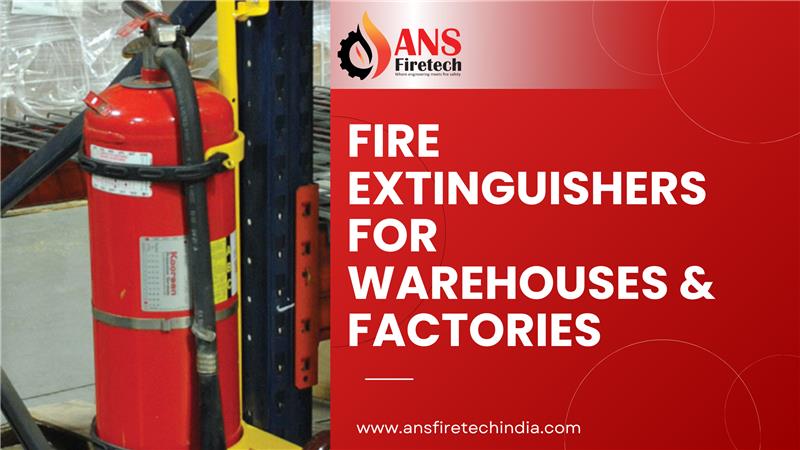
One of the most important parts of running any industrial plant is fire safety. Valued items, equipment, and materials that are easily combustible if appropriate safety measures aren’t taken are kept in warehouses and factories. Selecting the appropriate fire extinguishers for companies and warehouses is essential to halting minor fires from becoming major catastrophes.
This article explains which extinguishers are most effective in industrial settings, how to choose them according to the sorts of fires, and which safety regulations to adhere to for complete protection and compliance.
Understanding Fire Risks in Warehouses and Factories
Warehouses and factories face a wide range of fire hazards — from flammable chemicals to electrical faults. These environments often contain combustible packaging, oils, paints, fuels, and machinery that generate heat. Without a proper fire protection plan, even a small spark can lead to a devastating fire.
The first step in fire safety is identifying the type of fire risks present in your facility. Each fire type requires a different extinguishing agent.
Fire Classes You Need to Know
Before choosing an extinguisher, it’s important to understand the fire classification system:
- Class A: Fires involving solid materials like wood, paper, and textiles.
- Class B: Fires caused by flammable liquids like petrol, oil, and paint.
- Class C: Fires from flammable gases such as propane, butane, or LPG.
- Class D: Fires involving combustible metals like magnesium or aluminum.
- Class K (or F): Fires from cooking oils and fats (mainly in kitchens).
Warehouses and factories often face Class A, B, C, and D fire risks — meaning you’ll likely need multiple types of extinguishers across your facility.
Types of Fire Extinguishers for Industrial Use
Different extinguishers are designed to fight different kinds of fires. Here are the main types suited for warehouses and factories:
1. Water Fire Extinguishers (Red Label)
Ideal for Class A fires involving solid combustibles. Not suitable for electrical or flammable liquid fires.
2. Foam Fire Extinguishers (Cream Label)
Effective for both Class A and B fires — perfect for areas with flammable liquids and solid materials.
3. Dry Chemical Powder (DCP) Extinguishers (Blue Label)
One of the most versatile options, suitable for Class A, B, and C fires. Commonly used in industrial settings where multiple risks exist.
4. Carbon Dioxide (CO₂) Fire Extinguishers (Black Label)
Best for electrical fires and areas with sensitive equipment, such as control panels and server rooms.
5. Wet Chemical Fire Extinguishers (Yellow Label)
Used mainly for kitchen or food-processing areas where oil and grease fires (Class K) are common.
Having a combination of fire extinguishers ensures that every part of your warehouse or factory is properly protected.
Placement Guidelines for Fire Extinguishers in Warehouses
Proper placement is as important as choosing the right type. Here are some best practices:
- Install extinguishers near fire-prone zones, such as fuel storage, electrical panels, and machinery.
- Mount them at an accessible height — no higher than 1.5 meters from the floor.
- Ensure they are visible, unobstructed, and marked with signage.
- Maintain one extinguisher every 200 square meters of floor space (or as per local regulations).
- Conduct monthly inspections to ensure extinguishers are in working condition.
Maintenance and Inspection
Regular maintenance ensures that your extinguishers work when you need them most. Follow these simple steps:
- Check pressure gauges and seals monthly.
- Ensure labels are readable and not faded.
- Conduct professional servicing once every 12 months.
- Replace or refill extinguishers immediately after use.
- Keep a logbook of all inspections for compliance purposes.
Fire Safety Standards and Certification in India
Always buy extinguishers that are certified by ISI or BIS for compliance and dependability (under IS 15683:2018). In accordance with NFPA and National Building Code (NBC) regulations, certified extinguishers ensure quality and performance.
Additionally, train your staff in proper fire extinguisher usage using the PASS technique — Pull, Aim, Squeeze, Sweep — to ensure a quick and confident response during an emergency.
Why Choosing the Right Extinguisher Matters
Using the wrong extinguisher can worsen a fire or cause injury. For example, using a water extinguisher on an electrical fire can lead to electrocution. That’s why understanding fire classes and having clearly labeled extinguishers is vital.
By investing in industrial fire extinguishers, following placement guidelines, and ensuring regular maintenance, you not only comply with safety laws but also create a safer workplace for everyone.
Conclusion
Selecting the best fire extinguishers for factories and warehouses is about more than just following the law; it’s about protecting people, property, and equipment. Assess the fire hazards at your establishment, choose extinguishers appropriately, and perform routine maintenance to keep them operational.
The best defences against calamity in workplace fire safety are preparedness and prevention.
Use certified fire extinguishers and professional installation to safeguard your company.
For top-notch industrial fire safety products and expert advice, get in touch with Ans Firetech India right now.