

Every part of fire safety systems is essential to preventing fatalities and property damage. Among them, fire hose reels are a crucial component of first-response firefighting apparatus, offering a consistent flow of water to manage and put out flames in their early phases. However, these systems need to adhere to certain fire safety standards and laws in order to function properly.
We’ll go over the most important fire hose reel safety requirements in this blog, along with why adherence is essential to dependable and efficient fire safety performance.
What Is a Fire Hose Reel?
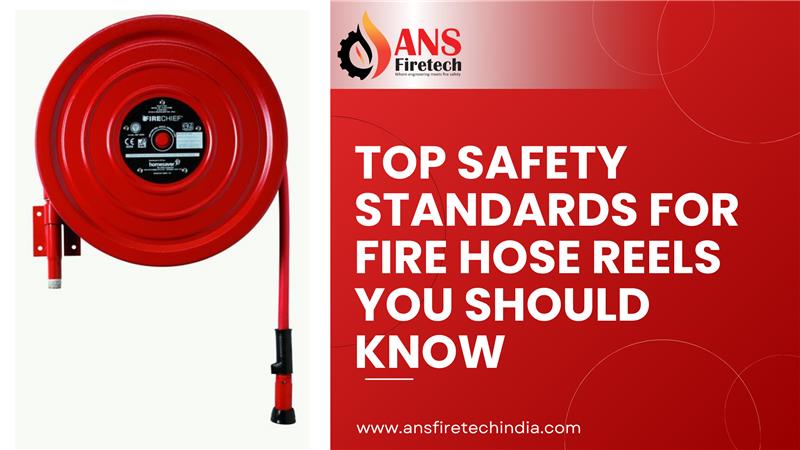
A length of fire hose that is permanently attached to a water source is stored in a cylindrical drum called a fire hose reel. Because it is quick and simple to use in an emergency, people or fire wardens can put out small to medium-sized fires before they get out of control.
As a component of the sprinkler or fire hydrant network, contemporary fire hose reels are commonly seen in public areas, factories, schools, and commercial structures..
Why Fire Hose Reel Standards Matter
Compliance with safety standards ensures that fire hose reels function correctly during emergencies, are made of high-quality materials, and meet local and international fire protection requirements. Non-compliance can lead to system failures, legal issues, and increased fire risk.
1. IS 884: Indian Standard for Fire Hose Reels
In India, IS 884:2018 by the Bureau of Indian Standards (BIS) is the key regulation governing fire hose reels.
This standard specifies requirements for:
- Hose reel design, performance, and materials
- Operating pressure and flow rate
- Hose reel drum dimensions and mounting brackets
- Testing methods for durability and leakage
It ensures that all hose reels installed in Indian facilities meet reliable performance and safety parameters.
2. BS EN 671-1: European Standard for Fire Hose Reels
The BS EN 671-1 standard applies across Europe and many international regions. It covers fixed fire hose reel systems with semi-rigid hoses, ensuring they deliver a consistent water flow for firefighting.
Key focus areas include:
- Maximum working pressure
- Hose material quality and flexibility
- Nozzle performance and water discharge rate
- Corrosion resistance and component durability
Fire hose reels complying with this standard provide optimum reliability in commercial and industrial environments.
3. NFPA 14: U.S. Standard for Standpipe and Hose Systems
The NFPA 14 (National Fire Protection Association) standard defines the design, installation, and maintenance of standpipe and hose systems, including hose reels.
It ensures:
- Proper water pressure and flow for firefighting
- Adequate placement of hose reels in multi-story buildings
- Compatibility with fire pumps and hydrant systems
Following NFPA 14 ensures that your fire safety system is code-compliant and performance-driven.
4. AS 1221: Australian Standard for Fire Hose Reels
In Australia, AS 1221:1991 sets out specifications for fire hose reels with semi-rigid hoses.
It covers:
- Material strength and construction quality
- Hose diameter and water delivery rates
- Thermal resistance and aging performance tests
This standard ensures that hose reels used in Australian facilities meet rigorous safety and reliability benchmarks.
5. Routine Testing and Maintenance Standards
Beyond installation standards, routine inspection and testing are equally important. Many international standards, including NFPA 25 and IS 15493, outline inspection frequencies and testing methods to verify the operational efficiency of fire hose reels.
Regular maintenance ensures:
- No blockages or leaks in the hose or nozzle
- Proper water pressure and flow
- Readiness during emergencies
6. Markings and Certification Requirements
All certified fire hose reels must have manufacturer identification, pressure ratings, model numbers, and test certificates clearly marked.
Always look for third-party certifications such as UL, FM, or CE, which guarantee that the equipment has undergone independent safety evaluations.
Conclusion
Understanding and complying with fire hose reel safety standards is essential for maintaining a robust fire protection system. Whether you follow IS 884, NFPA 14, or BS EN 671-1, ensuring that your fire hose reels meet certified benchmarks enhances reliability, safety, and regulatory compliance.
When you choose certified equipment and conduct regular testing, you not only meet safety codes but also create a safer environment for everyone.