

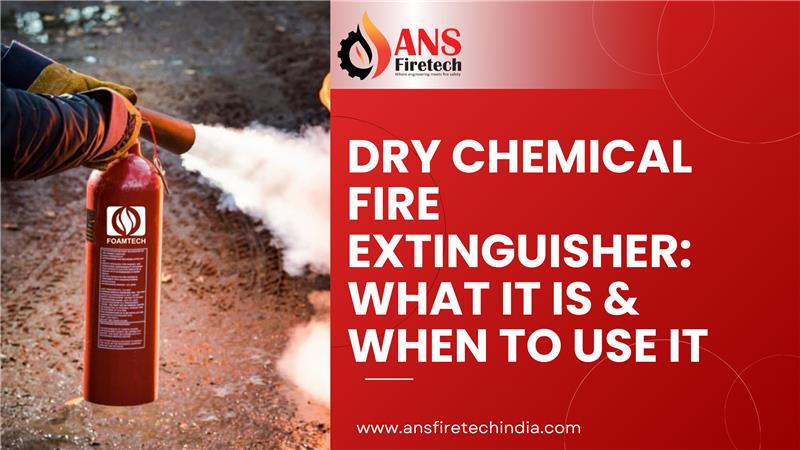
Reacting quickly during a fire might mean the difference between modest damage and a catastrophic event. The Dry Chemical Fire Extinguisher is one of the most dependable and popular fire suppression tools. It is a multipurpose, potent, and user-friendly tool that can fight several types of fire. This extinguisher is frequently the first line of defence in homes, workplaces, automobiles, factories and workshops.
This thorough explanation answers all of your questions about dry chemical fire extinguishers, including what they are, how they operate, and when to use them.
What Is a Dry Chemical Fire Extinguisher?
A Dry Chemical Fire Extinguisher is a portable fire suppression device that uses a powder-based extinguishing agent to interrupt the chemical reaction of a fire. These extinguishers are highly effective on various fire types and are commonly labeled based on the fire classes they can control, such as:
- Class A: Ordinary combustibles (wood, paper, cloth)
- Class B: Flammable liquids (petrol, diesel, oil)
- Class C: Electrical fires
- Class D: Combustible metals (in specialized versions)
- Class K/F: Cooking oils & fats (not common in dry chemical type)
The most popular variants include:
ABC Dry Chemical Extinguisher (Multipurpose)
Contains monoammonium phosphate, suitable for Class A, B, and C fires.
BC Dry Chemical Extinguisher
Uses sodium bicarbonate or potassium bicarbonate, suitable for Class B and C fires.
How Does a Dry Chemical Fire Extinguisher Work?
The working mechanism of a dry chemical extinguisher involves three core processes:
1. Pressurization
The extinguisher is filled with dry powder and pressurized using nitrogen or air. When the lever is squeezed, the powder is expelled with force.
2. Smothering Action
The dry chemical powder forms a barrier between the fuel and oxygen, effectively smothering the fire.
3. Interrupting the Chemical Reaction
Some powders (like monoammonium phosphate) chemically react with the fire to halt the combustion cycle, making it extremely efficient.
Flowing Mechanism:
- Pull the pin
- Aim at the fire base
- Squeeze the handle
- Sweep side to side
This classic PASS technique ensures fast discharge and effective fire control.
Types of Dry Chemical Fire Extinguishers
Here are the common variants explained simply:
1. ABC Dry Chemical (Multipurpose)
- Uses monoammonium phosphate
- Works on Class A, B, and C fires
- Leaves a sticky residue but provides excellent fire knockdown
2. BC Dry Chemical
- Uses sodium or potassium bicarbonate
- Works on Class B, C fires
- Common in vehicles, kitchens, and workshops
3. Purple-K (PKP)
- Potassium bicarbonate-based
- Highly effective for flammable liquids
- Often used in industrial, fuel-based environments
When Should You Use a Dry Chemical Fire Extinguisher?
Dry chemical extinguishers are ideal in situations involving:
1. Electrical Fires (Class C)
Examples:
- Short circuits
- Fuse box fires
- Electric panel flames
Powder is non-conductive, making it safe.
2. Flammable Liquid Fires (Class B)
Examples:
- Petrol spills
- Diesel fires
- Paint & solvent ignition
Perfect for fuel stations, workshops, garages, factories.
3. Ordinary Combustible Fires (Class A)
Examples:
- Paper
- Wood
- Cloth
- Rubber material
ABC powder extinguishers can tackle these effectively.
When NOT to Use a Dry Chemical Fire Extinguisher
Even though versatile, they are not suitable for:
Class K/F Fires
Kitchen oil fires (use wet chemical extinguishers)
Sensitive Equipment Areas
Like:
- Server rooms
- Medical labs
- High-end electronics
Powder can damage equipment.
Confined Spaces
The powder can reduce visibility and cause respiratory discomfort.
Does Dry Chemical Powder Leave Residue?
Yes. The powder can leave behind a fine, sticky, corrosive residue, especially ABC powder.
Cleanup is essential after use because the residue may damage electronics or metal surfaces.
Advantages of Dry Chemical Fire Extinguishers
- ✔ Works on multiple fire types
- ✔ Fast fire knockdown
- ✔ Affordable & widely available
- ✔ Simple to operate
- ✔ Effective in windy or outdoor conditions
- ✔ Long shelf life
Limitations of Dry Chemical Extinguishers
- Leaves powder residue
- Can damage electronics
- Reduces visibility when discharged
- Not suitable for oil/fat kitchen fires
- Requires thorough cleanup
How to Use a Dry Chemical Extinguisher (PASS Technique)
P – Pull the Pin
A – Aim at the base of the fire
S – Squeeze the handle
S – Sweep side to side
Always maintain a safe distance and ensure the fire is small and manageable.
Inspection & Maintenance Tips
To ensure readiness:
- Check pressure gauge monthly
- Look for leaks, rust, or dents
- Verify the safety pin and seal
- Shake the extinguisher occasionally to prevent powder compaction
- Get a professional service once every 12 months
- Refill immediately after any usage
Conclusion
A Dry Chemical Fire Extinguisher is one of the most versatile and essential fire safety tools that every home, office, vehicle, and industrial space must have. Its ability to combat multiple fire classes, rapid firefighting power, and ease of use make it an indispensable part of any fire safety plan.
Ensuring proper selection, handling, and maintenance guarantees maximum effectiveness during emergencies.