
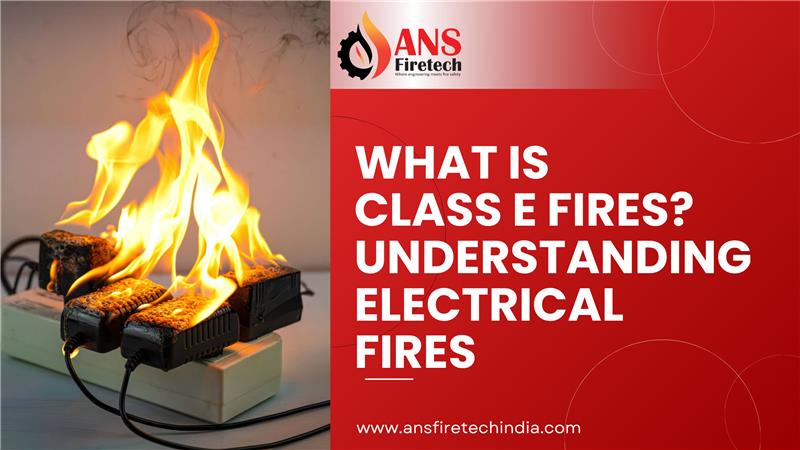
One of the most deadly and prevalent kinds of fires in residences, workplaces, and commercial buildings is an electrical fire. If they are not stopped in time, they can begin suddenly, spread quickly, and do significant harm. You must be aware of Class E fires, the dangers they present, and the appropriate fire safety gear in order to manage them properly.
This detailed guide explains everything you need to know about Class E fires including their causes, prevention tips, and which fire extinguishers are safe to use.
What Are Class E Fires?
Class E Fires, also known as electrical fires, involve energized electrical equipment such as:
- Electrical wiring
- Fuse boxes
- Circuit breakers
- Generators
- Computers & servers
- Home appliances
- Industrial machinery
- Electric panels
These fires occur due to electrical faults like short circuits, overloads, loose wiring, or equipment failure.
Important: Once the power supply is turned OFF, the fire may no longer be considered “Class E,” and can be treated as a different class (usually Class A).
Common Causes of Class E Electrical Fires
Electrical fires typically result from:
1. Short Circuits
A short circuit generates sudden, intense heat that can ignite nearby materials.
2. Overloaded Circuits
Plugging too many devices into one socket can cause overheating.
3. Damaged Wiring
Old, exposed, or poorly installed wiring is a major fire hazard.
4. Faulty Electrical Appliances
Defects in devices like microwaves, washing machines, or transformers can spark fires.
5. Loose Connections
Loose terminals cause arcing, which can ignite surrounding materials.
6. Moisture Near Electrical Systems
Water contact with live wires can create sparks and immediate fire.
Which Fire Extinguishers Can Be Used on Class E Fires?
Not all extinguishers are safe for electrical fires.
Here are the correct fire extinguishers for Class E fires:
1. CO₂ (Carbon Dioxide) Fire Extinguishers
✔ Best for electrical fires
✔ Leaves no residue
✔ Safe for electronics
✔ Quickly reduces oxygen to starve the fire
2. Dry Chemical Powder (DCP) Extinguishers
✔ Effective for various fire types
✔ Suitable for electrical panels, machinery, and switchboards
✔ Works by interrupting the chemical reaction
Never use water or foam extinguishers on electrical fires
Water conducts electricity and can cause electrocution.
Dangers of Class E Fires
Electrical fires are extremely dangerous because:
- They start silently and spread quickly
- They cannot be extinguished with water
- They can cause electrocution if mishandled
- They generate toxic smoke
- They can damage expensive electrical equipment
This is why workplaces, factories, IT companies, and residential buildings must keep certified electrical fire extinguishers on-site.
How to Prevent Class E (Electrical) Fires
1. Regular Electrical Inspections
Get wiring, panels, and appliances checked by certified electricians.
2. Avoid Overloading Sockets
Use heavy-duty surge protectors and avoid daisy-chaining.
3. Replace Old or Damaged Wiring
Cracked insulation or exposed wires must be replaced immediately.
4. Keep Water Away From Electrical Areas
Especially in kitchens, basements, and industrial plants.
5. Use High-Quality Electrical Components
Cheap cables and fittings are a major fire hazard.
6. Install Fire Alarm Systems
Early detection prevents fire spread — especially in server rooms and machinery areas.
7. Train Staff for Fire Safety
Most electrical fires become major accidents due to panic or incorrect extinguishing.
What to Do If an Electrical Fire Starts? (Step-by-Step)
Step 1: Turn Off the Power Supply
If safe, switch off the main power or circuit breaker.
Step 2: Use a CO₂ or DCP Extinguisher
Stand back 1–1.5 meters and discharge the extinguisher at the base of the fire.
Step 3: Avoid Using Water
Never pour water on an electrical fire — risk of electrocution.
Step 4: Evacuate If Fire Spreads
If flames grow rapidly, exit immediately and call the fire department.
Step 5: Call Professionals for Post-Fire Inspection
Electrical systems must be checked for damage before reusing.
Why Class E Fire Awareness Is Important for Businesses
Businesses and industries deal with high-power electrical systems, making Class E fires a major risk. Industries most affected include:
- IT companies & server rooms
- Manufacturing plants
- Warehouses
- Hotels & commercial kitchens
- Hospitals
- Schools & colleges
- Shopping malls
- Offices & corporate buildings
Installing the right fire extinguishers and maintaining electrical systems regularly can prevent expensive damage and downtime.
AnsfireTech India – Your Partner for Electrical Fire Safety
AnsfireTech India provides:
- CO₂ Fire Extinguishers
- DCP Fire Extinguishers
- Fire Alarm Systems
- Electrical Fire Safety Equipment
- AMC & Maintenance Services
- Fire Safety Audits
Our certified fire protection products ensure maximum safety for homes, offices, and industries.
Conclusion
Class E fires are dangerous but completely manageable with the right knowledge and equipment. By understanding the causes, risks, and correct extinguishers to use, you can prevent major damage and ensure complete electrical fire safety.
Investing in proper fire protection today means safeguarding people, property, and productivity tomorrow.